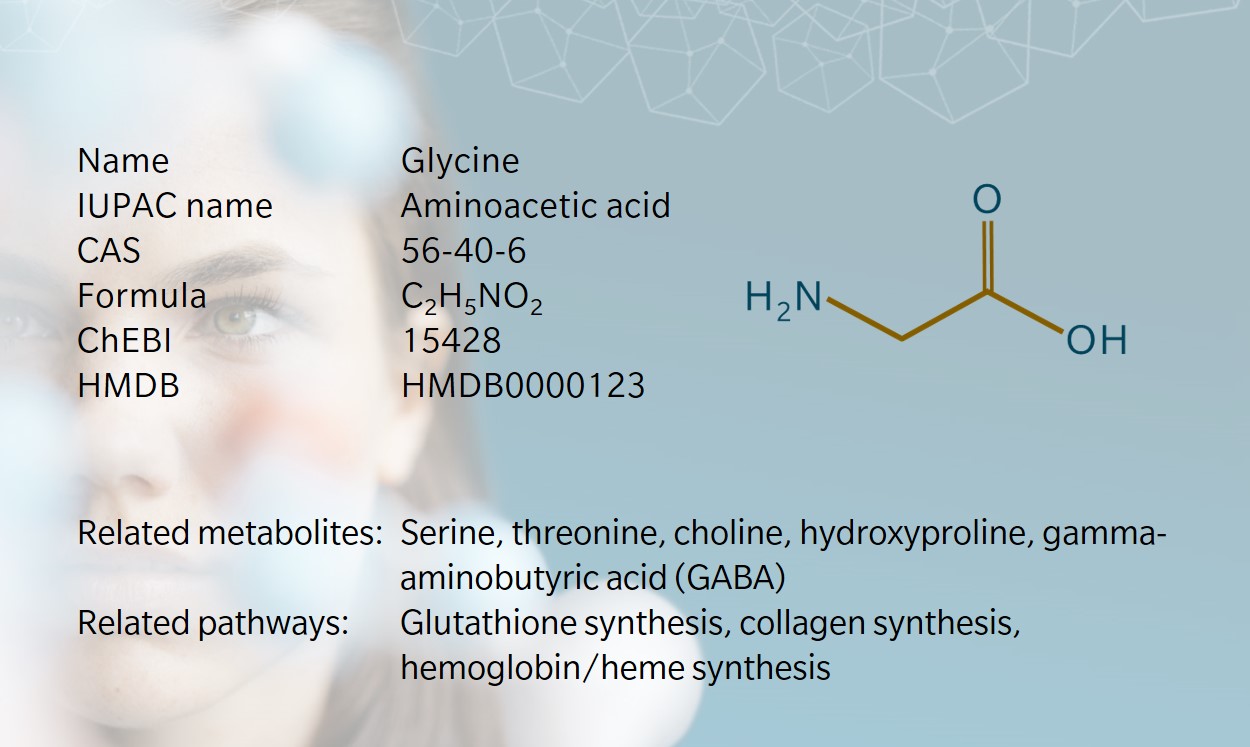
Glycine: The Underappreciated Workhorse of Human Physiology...

Glycine, the simplest of the 20 amino acids used in human protein synthesis, is often overlooked in popular discussions of nutrition and biochemistry. Despite its unassuming structure a single hydrogen atom as its side chain—glycine plays an indispensable role in numerous physiological processes, extending far beyond its function as a building block for proteins. Its role as a neurotransmitter, precursor for critical biomolecules, and participant in detoxification, antioxidation, and metabolic regulation points to a more profound biological importance than its “non-essential” designation suggests.
Recent research increasingly challenges this label, arguing that the body’s endogenous production of glycine may be insufficient to meet physiological demands under normal conditions—let alone during periods of stress, injury, or rapid growth. This reevaluation has catalyzed interest in glycine supplementation as a potential intervention for a variety of health concerns, ranging from metabolic syndrome and cardiovascular disease to aging and sleep disorders.
1. Glycine’s Biochemical and Physiological Functions
1.1 Protein Synthesis and Structural Roles
Glycine is ubiquitous in the proteome, particularly in collagen, where it accounts for roughly one-third of all amino acid residues. Collagen’s triple-helix structure, essential for the strength and flexibility of connective tissues, is only possible due to glycine’s compact size, which allows the three chains to pack tightly. This structural significance is not trivial: collagen comprises about 25–30% of total body protein, emphasizing glycine’s importance in maintaining musculoskeletal integrity, skin elasticity, vascular strength, and organ scaffolding [1].
1.2 Neurotransmission
Glycine also acts as an inhibitory neurotransmitter in the central nervous system, particularly within the spinal cord, brainstem, and retina. It binds to glycine receptors—chloride channels similar to GABA_A receptors—promoting hyperpolarization of neurons and modulating motor reflexes and sensory processing [2]. It also acts as a co-agonist at the NMDA receptor, required alongside glutamate for receptor activation, thus influencing excitatory neurotransmission, learning, and memory [3].
1.3 One-Carbon Metabolism and Detoxification
Glycine serves as a major contributor to one-carbon metabolism through its involvement in the folate and methionine cycles. It donates methyl groups via the glycine cleavage system and is a substrate in the biosynthesis of purines and porphyrins—essential for DNA synthesis and hemoglobin production, respectively [4].
Glycine is also a key component of glutathione, the body’s primary intracellular antioxidant. Formed from glutamate, cysteine, and glycine, glutathione neutralizes reactive oxygen species (ROS), supports redox homeostasis, and facilitates detoxification processes in the liver. Suboptimal glycine availability can therefore limit glutathione synthesis and compromise oxidative stress defense [5].
2. Endogenous Production vs. Physiological Demand
2.1 Glycine Synthesis
The human body synthesizes glycine primarily via the serine hydroxymethyltransferase (SHMT) pathway, which converts serine and tetrahydrofolate into glycine and 5,10-methylenetetrahydrofolate. Additional synthesis occurs through the glycine cleavage system and from threonine catabolism. However, these routes are often limited by substrate availability or enzyme activity under normal conditions.
Traditionally, glycine has been considered a “non-essential” or “conditionally essential” amino acid, meaning the body can produce it endogenously. But recent metabolic modeling and empirical studies suggest that this designation may be overly optimistic.
2.2 The Glycine Gap
In a landmark paper by Meléndez-Hevia et al. (2009), the authors performed a systems-level analysis and concluded that endogenous synthesis only provides about 2.5 grams of glycine per day, while the daily requirement for collagen synthesis and other physiological functions may be as high as 10 grams per day or more [6]. This shortfall—sometimes referred to as the “glycine gap”—implies that dietary intake must cover the remaining demand.
Dietary intake of glycine-rich proteins like skin, bones, and connective tissue has dramatically declined in modern diets, particularly in Western societies that favor lean muscle meats over whole-animal consumption. As a result, many individuals may be in a chronic state of suboptimal glycine availability.
3. Supplemental Glycine: Mechanistic Rationale and Emerging Evidence
3.1 Cardiometabolic Health
One of the most intriguing areas of glycine research relates to its role in metabolic health. Glycine levels are inversely correlated with obesity, insulin resistance, and type 2 diabetes. Observational studies show that individuals with lower plasma glycine concentrations are more likely to exhibit features of metabolic syndrome [7].
Mechanistically, glycine may improve insulin sensitivity by modulating inflammation, enhancing glutathione levels, and reducing oxidative stress. In murine models, glycine supplementation attenuates diet-induced obesity and hepatic steatosis [8].
Moreover, glycine has anti-inflammatory effects, particularly through glycine-gated chloride channels on immune cells and endothelial cells. This signaling reduces cytokine release, leukocyte activation, and oxidative burst, suggesting glycine could be beneficial in inflammatory states such as cardiovascular disease and atherosclerosis [9].
3.2 Sleep and Circadian Rhythm
Glycine has also shown promise as a sleep aid. Randomized controlled trials have found that glycine supplementation (typically 3 grams taken before bedtime) improves sleep onset latency, sleep efficiency, and subjective sleep quality [10]. Proposed mechanisms include glycine’s hypothermic effect—lowering core body temperature to promote sleep—as well as its calming influence via central nervous system inhibition and NMDA co-activation.
Notably, glycine does not appear to induce tolerance or dependence, distinguishing it from common pharmacologic sedatives.
3.3 Cognitive Health and Neuroprotection
As a co-agonist at the NMDA receptor, glycine may enhance cognitive function, learning, and memory. Some research suggests potential benefits in conditions involving NMDA receptor hypofunction, such as schizophrenia. However, results from clinical trials are mixed, and more work is needed to clarify the neuropsychiatric benefits of glycine.
Additionally, glycine's antioxidant support via glutathione may offer neuroprotective effects against neurodegeneration, including Alzheimer’s and Parkinson’s diseases, although human trials remain limited.
3.4 Longevity and Aging
Aging is characterized by progressive redox imbalance, mitochondrial dysfunction, and reduced collagen turnover—all processes influenced by glycine availability. Animal studies show that glycine supplementation extends lifespan in rodents, possibly by enhancing glutathione synthesis, preserving mitochondrial function, and modulating mTOR signaling [11].
Moreover, since collagen declines with age and is highly dependent on glycine, supplementation may support skin integrity, joint health, and vascular resilience in aging populations.
4. Safety and Dosing Considerations
Glycine is well-tolerated in doses up to 0.8 grams per kilogram of body weight per day, with most human studies using doses between 3 and 10 grams daily [12]. Side effects are rare and typically limited to mild gastrointestinal discomfort at higher doses.
Importantly, glycine is metabolically inert in the sense that it is not significantly converted into glucose or fat, making it a favorable candidate for long-term supplementation. Its sweet taste also makes it easy to incorporate into food or beverages.
That said, certain populations—such as those with nonketotic hyperglycinemia, a rare inborn error of metabolism—should avoid glycine supplementation. And while preliminary findings are promising, larger randomized controlled trials are needed to confirm glycine’s therapeutic potential in humans across diverse conditions.
Conclusion: Re-Evaluating Glycine’s Nutritional Status
Whether through its role in collagen biosynthesis, redox balance, metabolic regulation, or neurological function, glycine stands out as a potentially foundational nutrient for healthy aging and disease prevention. Given the variability in individual needs and responses to supplementation, tracking your body’s reaction—whether physical, cognitive, or metabolic—can offer critical insights. Tools like StackTracker allow users to log their supplement intake and observe patterns over time, making it easier to determine whether glycine is contributing to improved sleep, joint health, mental clarity, or other outcomes. As modern nutrition continues to emphasize muscle meats and isolated macronutrients, glycine may represent a crucial piece of the nutritional puzzle that has been inadvertently lost—and is now being rediscovered.
References
-
Ricard-Blum, S. (2011). The Collagen Family. Cold Spring Harbor Perspectives in Biology, 3(1), a004978. https://doi.org/10.1101/cshperspect.a004978
-
Legendre, P. (2001). The glycinergic inhibitory synapse. Cell and Tissue Research, 326, 393–407.
-
Johnson, J. W., & Ascher, P. (1987). Glycine potentiates the NMDA response in cultured mouse brain neurons. Nature, 325(6104), 529–531.
-
Stover, P. J., & Field, M. S. (2015). Trafficking of intracellular folates. Advances in Nutrition, 6(5), 562–571.
-
Wu, G., Fang, Y. Z., Yang, S., Lupton, J. R., & Turner, N. D. (2004). Glutathione metabolism and its implications for health. The Journal of Nutrition, 134(3), 489–492.
-
Meléndez-Hevia, E., de Paz-Lugo, P., Cornish-Bowden, A., & Cárdenas, M. L. (2009). A weak link in metabolism: the metabolic capacity for glycine biosynthesis does not satisfy the need for collagen synthesis. Journal of Biosciences, 34(6), 853–872.
-
Adeva-Andany, M. M., Carneiro-Freire, N., Donapetry-García, C., Rañal-Muíño, E., & López-Pereiro, Y. (2018). Glycine metabolism and its alterations in obesity and metabolic syndrome. Nutrients, 10(6), 809.
-
Alarcon-Aguilar, F. J., et al. (2008). Glycine suppresses appetite and reduces body weight in rats. Brain Research, 1200, 97–103.
-
Zhong, Z., et al. (2003). Glycine suppresses activation of Kupffer cells and improves survival after hemorrhagic shock. Shock, 19(6), 507–512.
-
Yamadera, W., et al. (2007). Glycine ingestion improves subjective sleep quality in human volunteers, correlating with polysomnographic changes. Sleep and Biological Rhythms, 5(2), 126–131.
-
Miller, R. A., et al. (2019). Glycine supplementation extends lifespan in genetically heterogeneous mice. Aging Cell, 18(6), e13016.
-
Navarro, M., et al. (2015). Safety of long-term glycine intake in humans. European Journal of Clinical Nutrition, 69(6), 632–638.