You probably know your vitamin D3 dose to the IU and your last ferritin to the decimal. Your squat record might read "3x5, felt fine." Both are inputs you care about, recorded at very different levels of precision. A supplement log can show what changed before a lab value moved. A note like "felt…
You probably know your vitamin D3 dose to the IU and your last ferritin to the decimal. Your squat record might read "3x5, felt fine." Both are inputs you care about, recorded at very different levels of precision. A supplement log can show what changed before a lab value moved. A note like "felt fine" cannot explain why a lift stalled or why a knee started complaining.
Does proper exercise form actually prevent injury?
The short answer: technique clearly changes where the load goes. Whether it changes who gets hurt is much less certain.
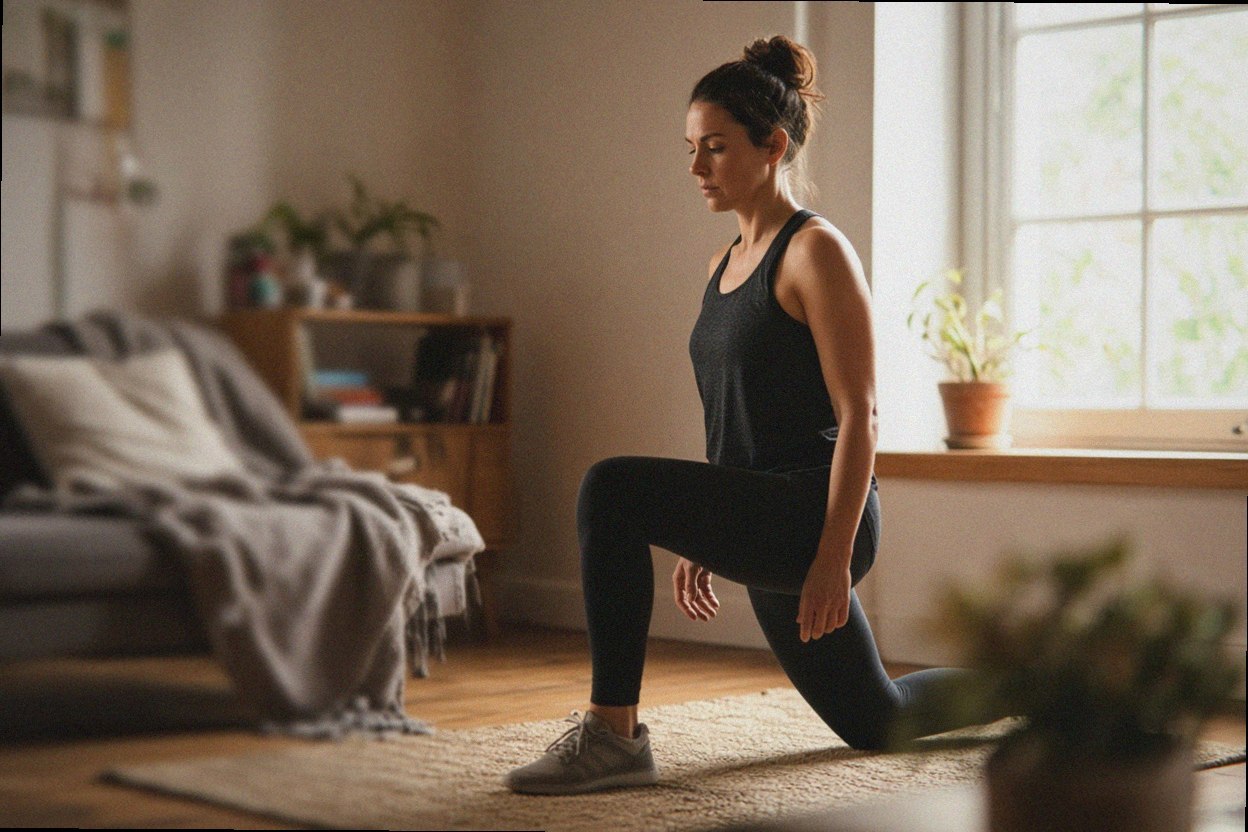
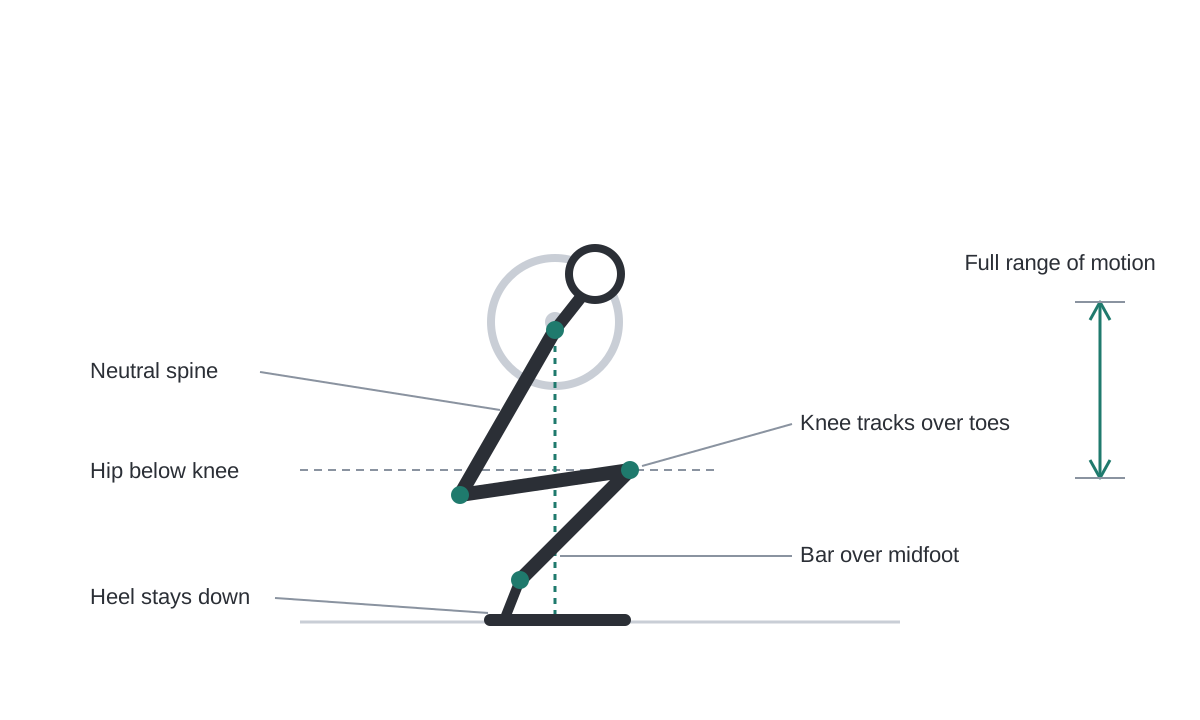
In resistance training, "form" covers several separate things. Technique is the movement pattern itself. Range of motion is how far the joints travel. Joint alignment is how the knees, hips and spine line up under load. Tempo is how fast each phase of the rep moves, and control is whether the rep looks the same from the first inch to the last. Each of these changes where the load goes.
Squat depth is the most studied example, and the findings run against a common assumption. A 2013 review of more than 164 articles found that the highest compressive forces and stresses behind the kneecap occur at about 90 degrees of knee flexion. Past that point, contact between the thigh and calf and a larger contact area in the joint spread the load. The authors concluded that deep squats do not add injury risk to passive tissues, with the condition that technique is learned under expert supervision and loads are increased progressively. They also noted that realistic knee-force estimates beyond 50 degrees of flexion are lacking (PMID 23821469).
Spinal position under load is the other common concern. In a motion-capture study of 13 people deadlifting at 60% to 90% of their one-repetition maximum, flexion in the lower thoracic and upper lumbar spine increased as the load got heavier, along with faster posterior pelvic tilt. The authors suggested this may raise stress on the lumbar discs (PMID 41195113). Like most of this literature, the study measured angles in a lab. It did not follow anyone to see who got hurt.
The evidence connecting technique to actual injuries is thinner. A systematic review of injury epidemiology in the weight-training sports found 20 eligible studies, only four of them prospective, and only five with a low risk of bias. Reported rates ranged from 0.24 to 1 injury per 1,000 hours in bodybuilding to 4.5 to 6.1 per 1,000 hours in strongman, which the authors described as relatively low compared with common team sports. The shoulder, lower back and knee were the most commonly injured sites (PMID 27328853). Designs like these struggle to separate technique from training age, load, volume and injury history. "Perfect form" is also partly individual. Limb proportions, hip structure and mobility change what a sound squat looks like on a particular body.
How much training volume does muscle growth need?
Training volume is usually counted one of two ways. The first is sets x reps x load, which gives a tonnage figure. The second is the number of hard sets per muscle per week. Most recent hypertrophy research uses weekly sets.
Schoenfeld, Ogborn and Krieger's 2017 meta-analysis pooled 15 studies with 34 treatment groups. Weekly sets, analyzed as a continuous variable, had a significant effect on changes in muscle size (P = 0.002). Each additional weekly set was associated with a 0.37% larger percentage gain in muscle size. When studies compared higher and lower volume directly, the higher-volume conditions showed a 3.9% larger gain (P = 0.03). When the same analysis grouped weekly sets into categories (fewer than 5, 5 to 9, 10 or more), the effect was only a trend (P = 0.074), and the evidence base was small (PMID 27433992).
A 2026 meta-regression by Pelland and colleagues used a much larger dataset: 67 studies and 2,058 participants. The probability that more weekly sets meant more growth was 100% for both muscle size and strength, but both best-fit models showed diminishing returns, much more pronounced for strength. Frequency behaved differently. Training a muscle more often showed little to no effect on size, while strength rose with frequency, again with diminishing returns (PMID 41343037).
How the researchers counted sets also mattered. Indirect sets could be scored as a full set, a half set or zero, and the half-set ("fractional") method had the strongest evidence. A set of bench press counted as half a set toward triceps. Two lifters running the same program can tally very different "sets per muscle" depending on which rule they use. The sample was 79.1% male with a mean age of about 25, so the findings carry less weight for women and older lifters, and individuals vary around these group averages.
| Variable | Definition | What research links it to |
|---|---|---|
| Volume | Weekly hard sets per muscle, or sets x reps x load | More sets, more growth and strength, with diminishing returns (PMID 27433992, 41343037) |
| Intensity / load | Weight lifted, often expressed as %1RM | Similar hypertrophy across loads; heavier loads favor maximal strength (PMID 28834797, 33433148) |
| Proximity to failure | Reps left in reserve (RIR) or rated exertion (RPE) | Growth rose as sets ended closer to failure; strength was similar across a wide range (PMID 38970765) |
| Frequency | Sessions per muscle per week | Negligible effect on size; strength rose with frequency (PMID 41343037) |
| Range of motion | How far the joint travels per rep | Full range beat partial for strength and lower-limb growth (PMID 34170576) |
| Tempo | Duration of each repetition | Similar growth from 0.5 to 8 seconds per rep (PMID 25601394) |
| Rest interval | Time between sets | 3-minute rests beat 1-minute rests for strength and thigh growth in one trial (PMID 26605807) |
Each row in this table can also be a column in a training log.
Heavy or light, full or partial range: what changes the result?
Intensity is usually expressed as a percentage of one-repetition maximum (%1RM). A 2017 meta-analysis of 21 studies compared low loads (60% 1RM or less) with high loads (above 60%), with every set taken to failure. Gains in one-rep max strength were greater with heavy loads, while muscle growth was similar (PMID 28834797). A 2021 network meta-analysis of 28 studies and 747 adults found the same pattern: no difference in hypertrophy between loads, and greater strength gains with high and moderate loads than with low loads (PMID 33433148).
Because growth was similar across loads when sets went to failure, how hard each set is becomes a central variable. It is usually recorded as reps in reserve (RIR) or RPE. Two meta-analyses have looked at it. Refalo and colleagues found only a trivial advantage for sets taken to failure over non-failure sets for hypertrophy, and no advantage for momentary muscular failure specifically (PMID 36334240). Robinson and colleagues modeled estimated RIR continuously. Muscle growth increased as sets ended closer to failure, while strength gains were similar across a wide range of RIR. Because RIR had to be estimated from study descriptions, the authors called the exact relationship unclear (PMID 38970765).
Progressive overload is the principle that the demand placed on a muscle increases over time. That increase can come from load, reps, sets or effort, and a log is the only reliable way to tell which one actually rose.
Range of motion and tempo have smaller literatures. A 2021 meta-analysis of 16 studies found that full range of motion produced greater strength gains (ES = 0.56) and greater lower-limb hypertrophy (ES = 0.88) than partial range, with no clear difference in muscle architecture (PMID 34170576). Where in the range the partial reps happen may matter. In one trial in 42 young women, partial calf raises in the stretched portion of the movement produced larger gains in medial gastrocnemius thickness (+15.2%) than full-range (+6.7%) or top-range (+3.4%) reps (PMID 37015016). For tempo, a meta-analysis found similar hypertrophy with repetition durations from 0.5 to 8 seconds, with very slow reps (over 10 seconds) appearing inferior on limited evidence (PMID 25601394).
Why does form break down late in a set?
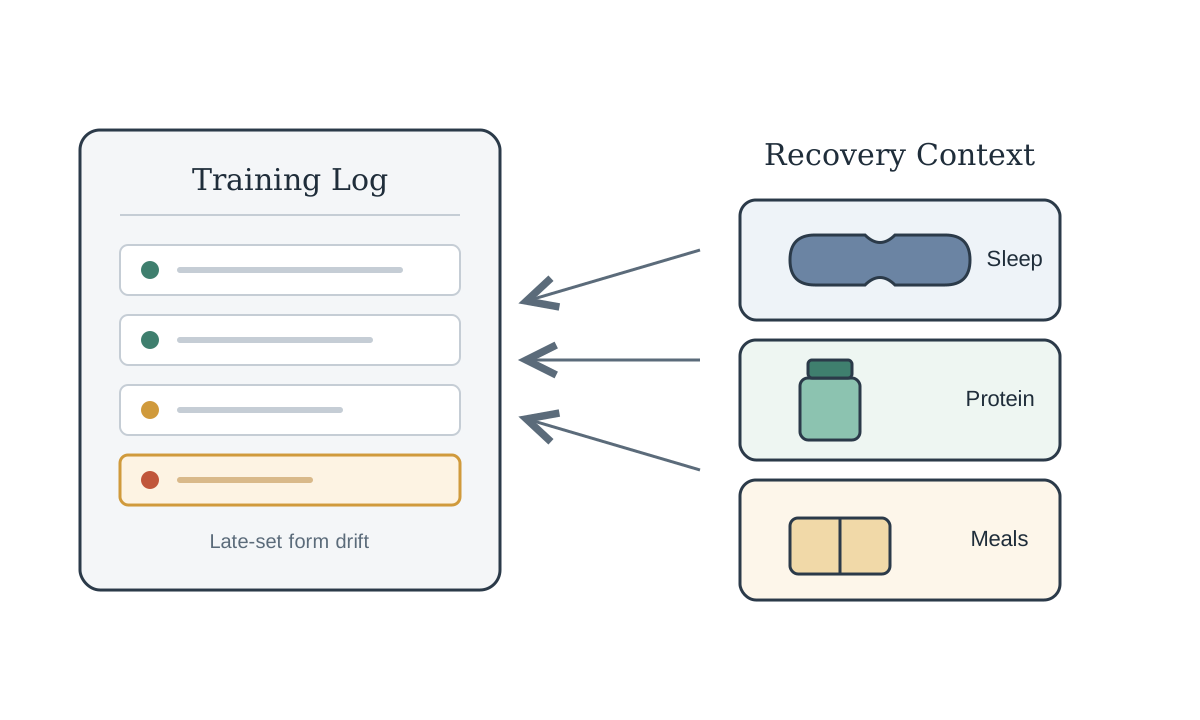
Fatigue changes how a lift is produced, even when it looks the same. In one study, 11 trained men did three sets of back squats to failure at 80% of 1RM. By the final rep, joint movements had slowed, but range of motion at the ankle, knee and hip had not changed. The joint moments had: the load at the knee decreased while the hip and lumbo-pelvic region took on more (PMID 31638481). So a late-set rep can look fine from the outside while the work shifts to different joints. Those reps are also the ones you are least able to judge while doing them, which is why they benefit most from a camera.
Recovery inputs sit underneath this. A systematic review of 17 studies found that a single night without sleep had little effect on strength, but consecutive nights of restricted sleep could reduce force output in multi-joint lifts, though not in single-joint ones (PMID 29422383). A meta-analysis of 49 studies with 1,863 participants found that protein supplementation during resistance training added to gains in one-rep max (2.49 kg) and fat-free mass (0.30 kg), with a smaller effect at older ages (PMID 28698222). A set that looks sloppy in the video may trace back to a short night or a low-intake day. You can only make that connection if those inputs are logged as well.
How can you get feedback on your workout form?
The simplest feedback tool is a training log. For each exercise, record sets, reps, load, RIR or RPE, and a short note on how it felt. With those fields filled in, a stall can be traced to something specific.
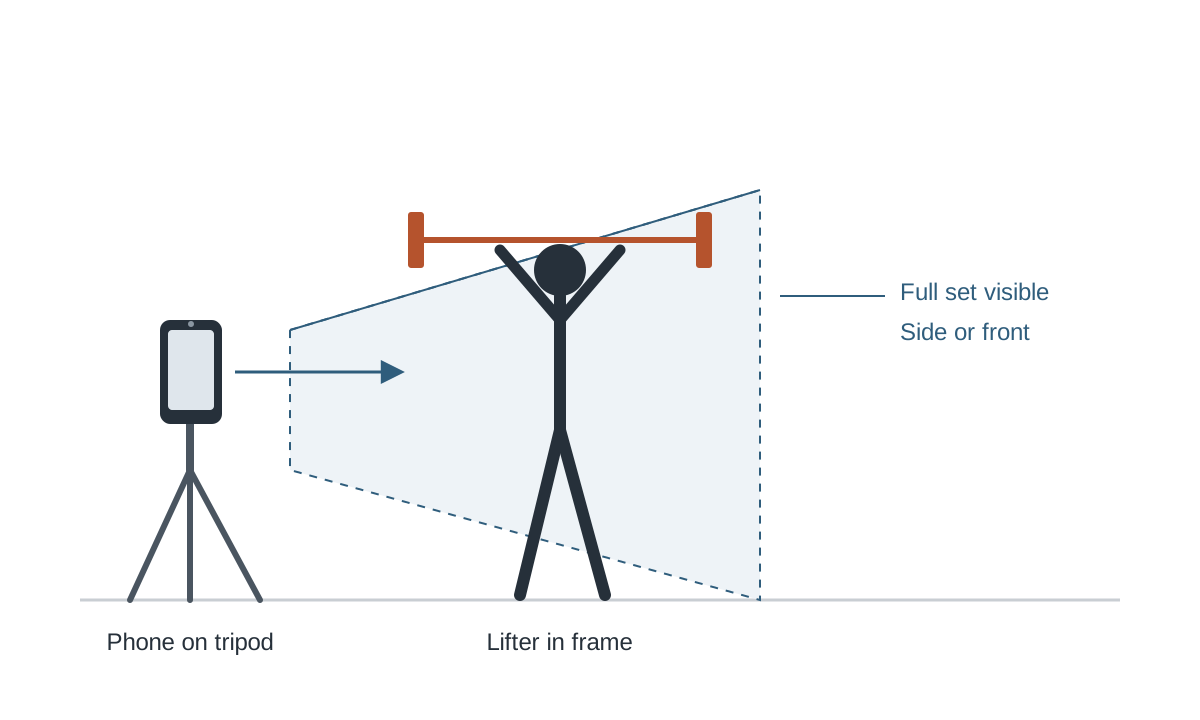
Filming sets from the side and the front adds what a log cannot capture. The side view shows depth, bar path and spinal position. The front view shows knee tracking and side-to-side shifts. The catch is timing. You watch the footage after the set is over, and you have to know what to look for.
AI form apps close that gap by watching while you move. They use pose estimation, which locates the joints in each camera frame and tracks the angles between them, and they give cues during the set. Those are the late reps that, as the fatigue research above shows, are hardest to judge from the inside. The underlying technology has been tested. A 2026 study recorded 15 healthy adults side-on with a smartphone. For squats, a widely used single-camera pose model (MediaPipe BlazePose) agreed well with frame-by-frame video annotation of knee angles (ICC 0.773), and 95% of squat recordings were usable. Agreement was lower on the other tasks in the study, so a result for one movement does not automatically carry over to another. It also depended on detection quality. When frames the model itself flagged as low-confidence were left in, squat agreement fell to an ICC of 0.428 (PMID 42976294). The study tested the model's raw angle output, not any app's form-check logic. In practice, these apps work best with the whole body in frame, decent lighting and a clear view of the moving joints. That is also why they focus on movements where plates, racks and spotters don't block the camera.
Posiqo is one app built on this approach. It is free to download on iOS and Android and covers 30+ exercises. Most are bodyweight movements such as squats, push-ups, lunges, planks and glute bridges, plus some dumbbell movements like curls and shoulder press, and yoga holds. During a set it gives real-time voice cues, so feedback arrives while you can still adjust the next rep. It gives per-rep form feedback, and it counts only the reps that pass its form check. The number you end with reflects reps that met its standard, not just reps attempted, which makes for a cleaner entry in a training log. Its pose detection tracks 33 body points at 30 frames per second and runs on the phone itself. Video is not uploaded, which matters if you'd rather not send footage of yourself to a server.
For heavy barbell lifts, pain, or anything the other methods can't explain, a qualified coach or physical therapist is the right source. They can account for your proportions and injury history, and they can interpret what the log, the footage and the app feedback show. Specific questions get more useful answers. For example: "My RIR on squats rises across sessions while load stays flat; is that technique or recovery?" Or: "Here's my last rep from the side; what is my lower back doing?"
| Method | When feedback arrives | What it catches | Cost / effort | Limits |
|---|---|---|---|---|
| Training log | After the session | Trends in load, reps, sets, RIR, subjective notes | Low cost; a few minutes per session | Self-reported; captures nothing about movement quality |
| Filmed video (side and front) | After the set | Depth, bar path, spinal position, knee tracking, late-set breakdown | Phone only; effort to set up and review | You have to know what to look for; one angle misses some planes |
| AI camera form app | During the set | Live cues and a check on every rep of supported exercises | Phone only; low setup | Needs a clear view (angle, lighting, whole body in frame); limited coverage of loaded barbell lifts |
| Coach or physical therapist | At scheduled sessions | Individual technique, body proportions, pain history, complex lifts | Paid sessions; scheduling | Quality varies by qualification; feedback is periodic |
Each method answers a different question. The log shows what changed over time, the video shows what happened in a given set, a camera app flags problems while the set is still going, and a coach can explain the cause.
Where does training data fit with your labs and supplements?
Training data becomes more useful when it sits next to the inputs that affect recovery. In Micros, you can log meals by plain-text description, by searching the USDA FoodData Central-backed database, or by photo (Premium). Each meal goes through a review step before it counts. Protein and energy then show against targets personalized from your height, weight and activity level. If you log creatine or other supplements, they count in the daily totals, and each row shows the food vs supplement split. Micros does not have a dedicated workout log, but check-ins can record how a session felt, and the AI chat can see nutrition totals alongside supplements, labs and check-ins. For the lab side of recovery, see training and recovery biomarkers. The app keeps these records together in one place. It cannot tell you whether a protocol works.
Once load, hard sets, RIR, filmed reps, protein against target and session check-ins sit in one timeline, look at the last time your progress stalled. Which variable changed first? Answer that from your own log, then bring it to your coach.
Disclosure: Micros and Posiqo have agreed to mention each other's apps in our content. No payment was exchanged.