You have probably already tried something. A melatonin gummy. Blackout curtains. Magnesium from whatever brand was on sale. Maybe sleep got marginally better, maybe it did not, and now you are back...
Why Your Sleep Keeps Falling Apart (And How to Actually Fix It)
You have probably already tried something. A melatonin gummy. Blackout curtains. Magnesium from whatever brand was on sale. Maybe sleep got marginally better, maybe it did not, and now you are back to staring at the ceiling with no clearer picture of what is actually wrong.
The frustrating part is that sleep quality degrades through multiple interacting variables, and most people test five things at once, get an ambiguous result, and cannot tell what moved the needle. That is a testing problem, not an information problem. This article covers the most common reasons sleep falls apart, the behavioral changes with real leverage, and the supplements with actual mechanistic support. The end covers how to structure this as a testable protocol rather than a guessing game.
This is not medical advice. If you suspect sleep apnea, restless leg syndrome, or chronic insomnia disorder, a sleep study and a clinician are the right next steps, not a supplement stack.
Why Sleep Quality Degrades: The Most Common Culprits

Caffeine Half-Life Is Longer Than You Think
Caffeine clears through CYP1A2 enzyme activity. In average metabolizers, the half-life runs five to six hours. Two hundred milligrams at 2 PM leaves roughly 100 mg circulating at 8 PM and about 50 mg at midnight. That residual amount tends to suppress slow-wave sleep depth and increase early-morning wakefulness even when it does not prevent you from falling asleep in the first place.
CYP1A2 is highly polymorphic. Slow metabolizers carry meaningful plasma concentrations into the early morning from a single afternoon dose. If your wearable consistently shows suppressed deep sleep or elevated resting heart rate on days with afternoon caffeine, that pattern is worth testing deliberately. A noon cutoff is a reasonable starting point. Move it earlier if you suspect slow metabolism.
Also audit your full stack. Pre-workout formulas, fat burners, and some nootropic blends contain caffeine that is easy to overlook when you are thinking about sleep hygiene in isolation.
Alcohol Fragments the Back Half of Your Night
Alcohol increases slow-wave sleep in the first few hours, which is why it feels like a sleep aid. As blood alcohol clears in the second half of the night, REM sleep drops, wakefulness after sleep onset rises, and sympathetic nervous system activity increases. HRV takes a measurable hit from even one to two standard drinks consumed within two to three hours of sleep onset.
The dose-response varies by body weight, sex, liver enzyme activity, and whether you ate beforehand. The common "one hour per drink" rule is a rough population average that does not hold uniformly. If you track HRV, look for trends across multiple drinking nights rather than a single data point, because consumer wearables are noisy during alcohol metabolism when heart rate is already elevated.
Social Jet Lag Disrupts Circadian Anchoring
The suprachiasmatic nucleus runs on a roughly 24-hour cycle that depends on consistent timing cues. Sleeping until 9 AM on weekends after a 7 AM weekday schedule shifts your circadian phase by one to two hours. That mismatch degrades sleep onset latency and sleep quality across the week without any obvious acute cause.
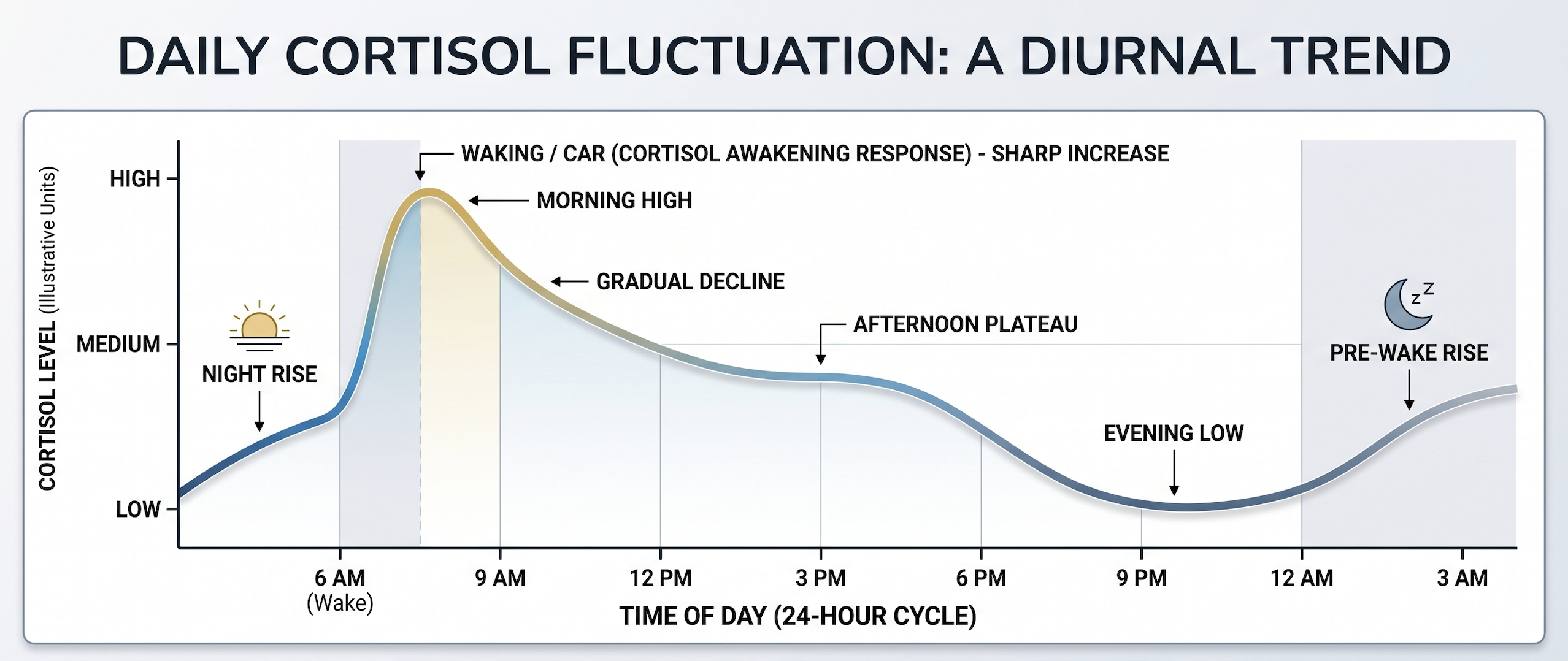
Consistent wake time anchors the rhythm more reliably than consistent bedtime, because it directly interacts with morning light exposure and the cortisol awakening response. If you can only hold one variable fixed, make it wake time.
Light Timing Requires More Precision Than Most People Apply
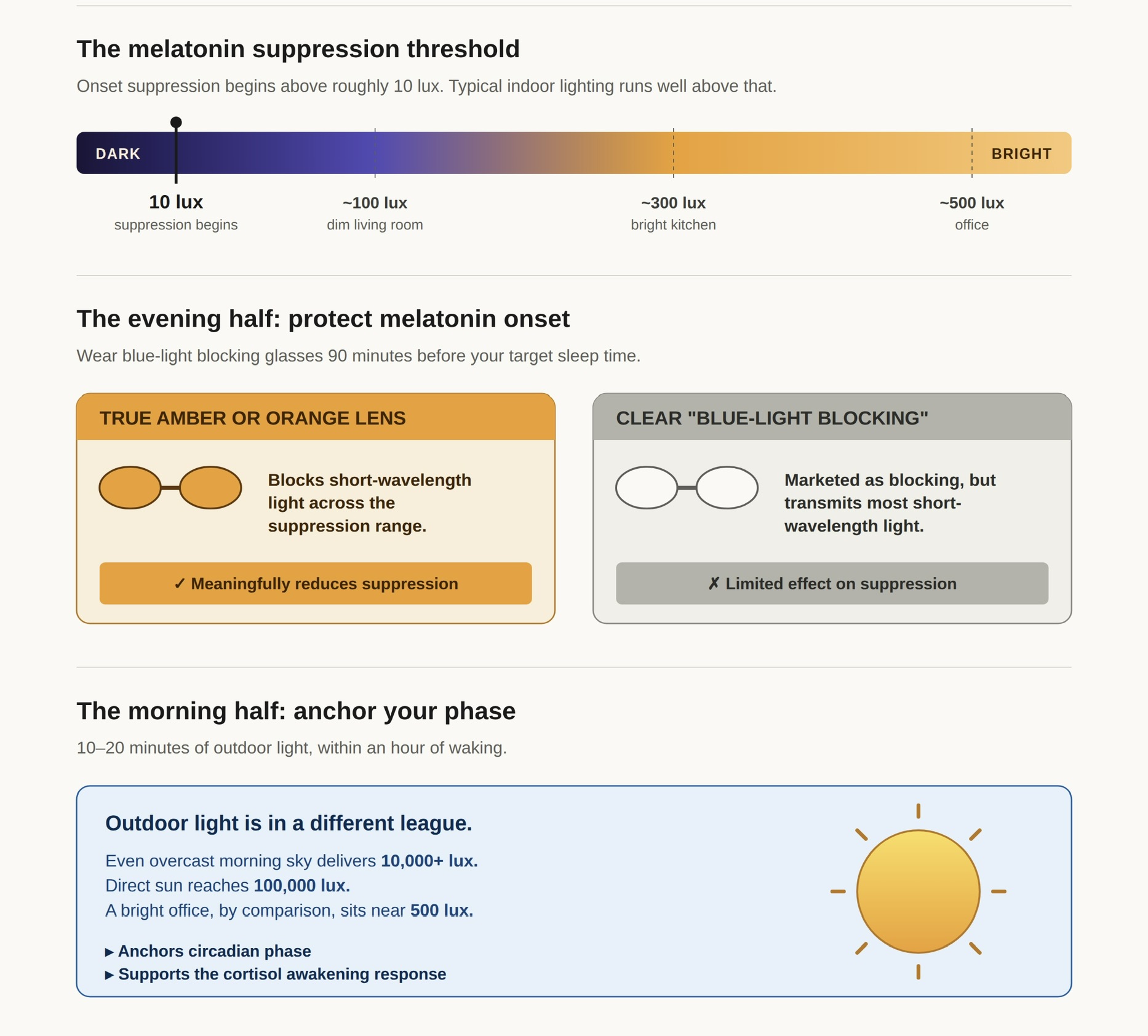
Melatonin onset suppression begins at light intensities above roughly 10 lux. Typical indoor lighting runs well above that threshold. Blue-light blocking glasses with a true amber or orange lens (not the clear lenses marketed as blue-light blocking, which transmit most short-wavelength light) can meaningfully reduce this suppression when worn 90 minutes before your target sleep time.
Morning light is the other half of this. Ten to twenty minutes of outdoor light within an hour of waking helps anchor circadian phase and supports the cortisol awakening response. People who work indoors through the morning and cannot fall asleep at a reasonable hour are often running a phase-delayed rhythm driven by insufficient morning light exposure, not by anything wrong with their evening routine.
Core Temperature Drop Is a Prerequisite for Sleep Onset
Sleep onset requires a core body temperature drop of roughly one to 1.5 degrees Celsius, driven partly through peripheral vasodilation that moves blood to the hands and feet to radiate heat outward. A room between 65 and 68 degrees Fahrenheit supports this process. Rooms above 72 degrees increase wakefulness and reduce slow-wave sleep duration in most people.
This thermoregulatory mechanism is also why glycine appears to support sleep, which is covered in the supplement section below.
Going to Bed in a Caloric Deficit Can Wreck Sleep
Going to bed in a significant caloric deficit, especially after hard training, can trigger a counterregulatory hormonal response involving glucagon and adrenaline to maintain blood glucose during the overnight fast. The result is sleep fragmentation and early-morning waking that feels like anxiety but is partly metabolic in origin.
A moderate meal with protein and fat two to three hours before sleep provides substrate to buffer overnight glucose without requiring active digestion during the window when parasympathetic tone should dominate. Large meals immediately before sleep create a different problem. Timing matters on both ends.
Overtraining Elevates Nighttime Cortisol
Hard training elevates cortisol and sympathetic tone. When volume or intensity outpaces recovery capacity, nighttime cortisol can remain elevated long enough to suppress melatonin onset and increase sleep fragmentation. If resting heart rate is trending up and HRV is trending down across a two-week training block while sleep quality simultaneously degrades, training load is the more likely culprit than anything in your supplement stack.
Tracking these variables together across a training cycle surfaces this pattern before it becomes a full recovery deficit.
Cognitive Arousal at Bedtime
The most common reason people cannot fall asleep despite feeling physically tired is mental activation: problem-solving, replaying conversations, planning, and the kind of low-grade stress that makes lying in a dark room feel like waiting for something bad to happen. Sedating supplements do not resolve this well.
What tends to help: writing down unfinished tasks and open decisions before bed to offload them from active memory, stopping emotionally activating content at least 60 minutes before sleep, and establishing a consistent pre-sleep sequence your nervous system learns to associate with downshifting. L-theanine addresses the alpha-wave component of this, but the behavioral scaffolding is doing the heavier lifting.
Screens Are Both a Light Problem and a Stimulation Problem
Bright displays keep the brain in a state of directed attention regardless of content, but the content matters too. Scrolling, gaming, and reading anything that provokes a stress response sustains arousal past the point where your body would otherwise start downshifting. Night mode and blue-light filters reduce the light component but do nothing about the stimulation component.
If you use screens late, reduce brightness aggressively and stop treating screen time as a wind-down activity. Dim does not mean neutral.
Supplements That May Be Disrupting Your Sleep
Before adding sleep-support compounds, audit what might already be working against you:
Pre-workout and stimulant blends taken in the afternoon, especially those combining caffeine with synephrine or tyrosine
High-dose B vitamins at night, particularly B6 and B12, which some people find activating
Adaptogens with stimulating rather than calming effects in practice, including certain rhodiola and ginseng formulations
Melatonin doses above 1 mg used nightly, which can cause morning grogginess and may not outperform lower doses on sleep quality
Racetams and cholinergic nootropics taken too late, which can increase mental activation and delay sleep onset
If sleep got worse after adding a compound, do not dismiss the connection because the label says "wellness" or "cognitive support."
Supplements With Mechanistic Support

These compounds have defined mechanisms and meaningful evidence behind them. They are not a substitute for addressing the behavioral variables above. If caffeine runs past noon and alcohol is a regular part of your week, no supplement combination compensates for that.
Magnesium Glycinate
Magnesium acts as a cofactor in GABA receptor function and plays a regulatory role in the hypothalamic-pituitary-adrenal axis. Deficiency is common in people with high training loads and may contribute to elevated cortisol, muscle tension, and sleep fragmentation. Magnesium oxide has poor bioavailability and frequently causes GI distress. Magnesium glycinate delivers elemental magnesium alongside glycine, both of which have independent relevance to sleep.
Magnesium threonate is sometimes discussed for cognitive applications due to blood-brain barrier penetration, but comparative evidence favoring it over glycinate specifically for sleep is limited. For sleep purposes, glycinate is the more practical and better-tolerated choice for most people.
Typical dosing: 200 to 400 mg of elemental magnesium 30 to 60 minutes before sleep. Some people experience loose stools at the higher end of this range, particularly early in use. Starting at 200 mg and titrating up over a week avoids this for most. The Micros Tracker magnesium guide covers form comparisons and absorption data in more detail.
Glycine
Glycine is an inhibitory neurotransmitter that acts at glycine receptors and modulates NMDA receptor activity. At 3 grams taken before sleep, research suggests it may reduce core body temperature through peripheral vasodilation, supporting the thermoregulatory drop needed for sleep onset. Studies have shown improvements in subjective sleep quality and next-day alertness without sedation or morning grogginess, and it appears well tolerated at this dose without the tolerance development associated with sedative compounds.
A small subset of users report mild GI discomfort at 3 grams, particularly on an empty stomach. Taking it with a small amount of food or splitting into two doses resolves this in most cases.
If you tend to run warm at night or live somewhere where room cooling is difficult, glycine is a reasonable first isolated variable to test.
L-Theanine
L-theanine is an amino acid found in green tea that increases alpha wave activity, supporting a state of relaxed alertness rather than sedation. At 200 mg, research suggests it may reduce the cognitive arousal and rumination that delays sleep onset in people whose primary barrier is mental activity rather than physiological sleepiness. It does not reliably extend sleep duration in most studies, but it can shorten sleep latency in the right context.
It pairs reasonably with magnesium glycinate for people who need both calming support and thermoregulatory support. Tolerance is not a significant concern at sleep doses. Interactions with sedative medications are theoretically possible, so flag it with a clinician if you are on anything in that category. The L-theanine guide covers more on dosing and its role in caffeine protocols.
Melatonin
Melatonin functions as a circadian timing signal, not a sedative. Endogenous production peaks in the range of 0.1 to 0.3 mg. Most commercial products contain 5 to 10 mg, which is pharmacological rather than physiological in scale. Research supports doses between 0.3 mg and 1 mg for shifting circadian phase or supporting sleep onset. Whether higher doses meaningfully outperform lower doses for general sleep quality is contested in the literature, and the grogginess many people experience the next morning is dose-related.
Melatonin is most useful for circadian disruption: jet lag, shift work, and resetting a phase-delayed rhythm. Using it nightly at high doses as a general sedative is a different application with a weaker evidence base. People with hormone-sensitive conditions, those who are pregnant or breastfeeding, and those on anticoagulants or medications affecting serotonin should consult a clinician before regular use.
Apigenin
Apigenin is a flavonoid found in chamomile. It acts as a mild positive allosteric modulator at GABA-A receptors, enhancing GABA signaling at the same receptor site targeted by pharmaceutical anxiolytics, but with substantially weaker affinity and effect. At doses around 50 mg, some evidence suggests it may support sleep onset and reduce anxiety without the dependence or tolerance risk associated with pharmaceutical GABA modulators. The evidence base is smaller than for magnesium or glycine, but the mechanism is well characterized.
People actively monitoring thyroid function should note that apigenin shows some evidence of thyroid peroxidase inhibition in vitro. At 50 mg this is unlikely to be clinically significant, but it is worth factoring in if you are tracking thyroid panels.
Tart Cherry
Tart cherry contains melatonin and anthocyanins that may inhibit IDO enzyme activity, potentially increasing tryptophan availability for serotonin and melatonin synthesis. Studies using tart cherry concentrate have shown modest increases in sleep duration, roughly 30 to 84 minutes across trials, though effect sizes vary and study quality is mixed. This is not a primary intervention. It is a reasonable addition once behavioral variables and higher-priority supplements have been addressed.
Tart cherry juice carries meaningful sugar content, which matters if you are tracking glucose or running a lower-carbohydrate protocol. The concentrate form allows dose control without the full carbohydrate load.
The Variable Isolation Problem
Here is where most sleep protocols fail in practice. Someone adds magnesium glycinate, glycine, melatonin, and L-theanine in the same week. Sleep improves slightly. They attribute it to the stack. Three months later they are not sure which compounds are doing anything, so they keep buying all of them. Sleep worsens during a stressful period. They add apigenin. Now they have no idea what is doing what.
Sleep quality varies with training load, stress, illness, travel, alcohol, schedule drift, and seasonal light changes. A single better night after starting a new compound is noise. A consistent trend over 14 nights with controlled inputs is signal. The only way to know whether glycine is affecting your core temperature or whether magnesium is showing up in your HRV trend is to isolate the variable and track the outcome across enough nights to see through the noise.
Subjective evaluation alone makes this harder. You might feel rested on a night where your tracker shows fragmented sleep architecture. You might feel terrible after a technically solid night. Correlating supplement inputs with both subjective ratings and objective metrics like sleep latency, REM duration, HRV, and resting heart rate over time gives you something concrete to act on.
Micros Tracker connects supplement logging to Apple Health data and qualitative check-ins in one place, so you can see whether the magnesium you added three weeks ago is showing up in your HRV trend or just in your memory of having started something new. The app is available on iOS if you want to start logging this week.
A Protocol to Actually Run
A person reviewing sleep logs and supplement tracking data on a phone in a calm setting.
Pick one variable. Not five.
If caffeine runs past noon, move the cutoff and log sleep latency and subjective quality for 14 nights. If you tend to run warm, add 3 grams of glycine before sleep and track how quickly you fall asleep and how you feel the next morning over two weeks. If you are currently taking 5 mg of melatonin nightly, drop to 0.5 mg and note whether next-morning grogginess changes.
If mental noise is the main barrier, try writing down open tasks and unresolved decisions before bed for one week, then layer in 200 mg of L-theanine the following week and compare sleep latency between the two conditions. If alcohol is part of the pattern, run one alcohol-free week and compare HRV and sleep scores against your baseline, keeping in mind that consumer tracker data is noisy enough that you want at least five to seven nights per condition before drawing conclusions.
Log the input. Log the outcome. Give it enough nights to generate a real signal. One night tells you almost nothing. Two weeks of consistent data gives you something you can actually use to make the next decision.
If you apply this approach consistently and sleep remains poor, or you wake unrefreshed despite adequate hours, a sleep study is the appropriate next step. Behavioral and supplement interventions address circadian misalignment, mild deficiencies, and stress-driven fragmentation. They do not address apnea, restless leg syndrome, or chronic insomnia disorder, which have distinct mechanisms that require clinical evaluation.