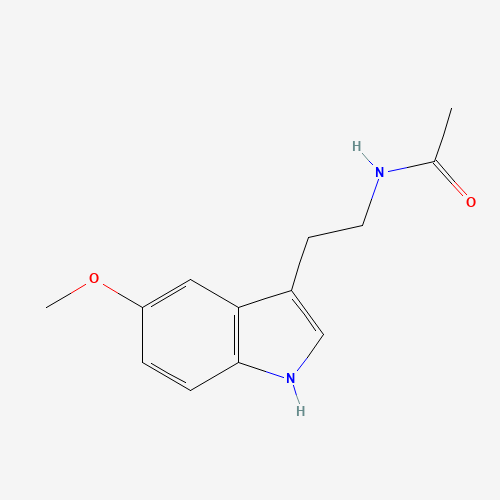
Background
Melatonin was isolated in the twentieth century, but it quickly became one of the best-known self-directed sleep supplements because it occupies a space between hormone, chronobiology tool, and over-the-counter sleep aid. That convenience is useful, but it also encourages sloppy dosing and unrealistic expectations.
Evidence snapshot
Melatonin has its clearest use case when the problem is timing, such as delayed sleep phase or travel-related circadian disruption.
For general insomnia, the effect tends to be modest and is usually smaller than what people expect from the supplement's reputation.
Higher doses are not automatically better and can increase the odds of next-day grogginess, headache, or vivid dreams.
Melatonin is a timing tool first
Melatonin makes the most sense when the body clock is out of position relative to the target bedtime. That includes travel, delayed sleep timing, and schedules that have drifted later than intended.
If someone is exhausted but wired, stressed, drinking caffeine late, or spending every evening in bright light, melatonin may help a little, but it rarely fixes the main problem by itself.
Immediate-release versus extended-release
Immediate-release melatonin is generally the better fit for sleep-onset issues because it creates a faster signal. Extended-release versions are more relevant when someone falls asleep reasonably well but wakes too early or too often.
That distinction matters more than brand language. Many disappointing melatonin experiences are really just a mismatch between the form used and the sleep pattern being targeted.
What a clean melatonin trial looks like
A clean trial keeps the wake time fixed, limits late caffeine, and changes one thing at a time. That makes it easier to tell whether melatonin improved sleep timing or simply produced a more sedated feeling at night.
For a health-conscious adult, that is the difference between using melatonin intelligently and using it as a nightly reflex.
Compound variations
Immediate-release melatonin
Faster acting form typically used when the main goal is falling asleep earlier or falling asleep more predictably.
Common use case
Sleep-onset latency, travel, and circadian phase shifts.
Dosage note
Usually taken earlier relative to the desired bedtime than people expect.
Extended-release melatonin
Slower-release form designed to maintain levels longer into the night.
Common use case
Sleep maintenance complaints or early-night benefit that fades too quickly.
Dosage note
Higher total dose is not always necessary; the release profile is the point.
Dosage and best practices
Dosage principles
- Use the lowest effective dose first — melatonin works as a circadian signal as much as a sedative aid. MIT research (Wurtman et al., 2001) found that just 0.3 mg restored sleep efficiency in adults 50+ by raising plasma levels to normal nocturnal concentrations (~113 pg/mL). The same study showed 0.3 mg actually outperformed 3.0 mg by 23% on sleep-quality measures, while the higher dose caused hypothermia and left melatonin elevated into daylight hours. Most OTC tablets (3–10 mg) deliver 10–33x the physiological dose, saturating MT1/MT2 receptors and risking desensitization over weeks. Start at 0.3–0.5 mg; if ineffective after several nights, step up to 1 mg, then 3 mg maximum.
- Timing matters as much as dose — the same capsule can help or hinder depending on when it is taken. For simple sleep-onset support, take immediate-release melatonin 2–3 hours before bed; a dose-response meta-analysis (Fatemeh et al., Journal of Pineal Research) found significantly greater reduction in sleep latency at the 2–3 hour window versus bedtime dosing. For circadian phase-shifting — e.g., delayed-sleep-phase disorder or jet lag crossing 5+ time zones — the human phase response curve (Burgess et al., 2010) shows maximum phase advance when 0.5 mg is taken 2–4 hours before dim-light melatonin onset (roughly late afternoon to early evening). The Cochrane review on jet lag warns that melatonin taken at the wrong time of day actively delays adaptation to local time.
- Extended-release forms suit sleep maintenance more than simple sleep-onset problems. A 2023 crossover study showed ER melatonin sustains levels above 300 pg/mL for roughly 6 hours, versus a sharper but shorter peak from immediate-release (Tmax 0.6 h vs. 1.56 h). The Circadin trials (Wade et al., 2007) demonstrated that prolonged-release 2 mg improved sleep quality, morning alertness, and wake-after-sleep-onset in adults 55+, with no withdrawal or rebound on discontinuation. However, the Cochrane jet lag review found slow-release formulations relatively ineffective for circadian resetting — the clock responds better to a sharp melatonin spike mimicking natural onset. Rule of thumb: IR for falling asleep and jet lag, ER for staying asleep.
Best practices
- Match the form to the problem: immediate-release for sleep onset, extended-release for staying asleep.
- Keep light exposure, caffeine timing, and wake time consistent or the supplement does more guesswork than useful work.
- Test it for a defined period instead of drifting upward in dose whenever sleep is off.
Literature and references
A Systematic Review and Network Meta-Analysis of Randomized Controlled Trials Evaluating the Evidence Base of Melatonin, Light Exposure, Exercise, and Complementary and Alternative Medicine for Patients with Insomnia Disorder
J Clin Med • 2020
Network meta-analysis found melatonin may help some insomnia outcomes, but the overall effect remains modest relative to how widely it is used.
The use of exogenous melatonin in delayed sleep phase disorder: a meta-analysis
Sleep • 2010
Supports melatonin as a circadian phase-shifting tool, especially when delayed sleep timing is the main issue.
Safety of higher doses of melatonin in adults: A systematic review and meta-analysis
J Pineal Res • 2022
Higher-dose melatonin appeared broadly safe in available trials, but adverse events such as drowsiness, headache, and dizziness became more common.
Melatonin: Pharmacology, Functions and Therapeutic Benefits
Curr Neuropharmacol • 2017
Broad review of melatonin physiology, receptor signaling, and therapeutic use cases that helps frame why timing matters so much.
Common questions
Is more melatonin stronger?
Not reliably. Higher doses can increase side effects without producing better sleep timing. For many people, the main leverage comes from timing, not from escalating milligrams.
Can melatonin help with jet lag?
Yes, that is one of its cleaner use cases. It is best used alongside planned light exposure and a target sleep schedule rather than on its own.
Why does melatonin help one night and fail the next?
Because the surrounding inputs still matter. Light exposure, bedtime drift, alcohol, stress, and caffeine can easily overpower a poorly timed melatonin routine.